He stopped near Dylan’s door and listened. From the other side, his boy’s breaths rose and fell in a steady rhythm. Steve normally let his son sleep late on Saturdays, but it would take them at least an hour and a half to get to the power plant where they would hunt. He softly knocked, then entered.
“Hmm? Dad?” Dylan stirred beneath the sheets. His eyes were tiny slits in the gray dim light.
“Hey, buddy. It’s time to get up. We’re going to go hunting.”
“You’re going hunting? Can I come?” He yawned.
“It’s what I just said, silly. Take a quick shower and meet me downstairs. We’ve got a lot to do before we leave.” Steve turned to leave the room but paused a moment. “When you get done, just throw on another old shirt and shorts.”
“Okay.” Dylan tossed the sheets aside and climbed down from his bed in unsteady movements. Steve watched as his son shuffled past and down the hall toward the bathroom, and only when Dylan shut the door left his son’s room.
Twenty minutes later, the two stood in the garage. Steve was already dressed. He’d put on a pair of Carhartt overalls and flannel hunting jacket, a bright orange hat pulled down around his ears. Dylan wore only the t-shirt and shorts his father had mentioned.
Steve handed his son different articles of clothing to put on, pulling them from a cabinet against the wall: long underwear, a smaller pair of overalls, and an old, hooded sweatshirt. The last item was bright orange. The boy skeptically held it out in front of him.
“Dad,” Dylan said, “I thought the point of hunting was to be camouflaged.”
“You have to wear something bright orange, so you don’t accidentally get shot,” he said, sliding his arms through the holes of his own bright vest. “When you’re out in the fields, you can still blend in with your surroundings. It’s hard telling who could be out there.”
“Oh.” He pondered this in silence. Then he asked, “Will you let me carry my gun?”
Steve noticed Dylan’s gaze shift to another glass cabinet on the same wall. Inside laid a .410 break-action shotgun with one barrel, wrapped in a cloth cover. It was a gift for his son’s ninth birthday the previous year. A small gun, it provided just enough kick to get the job done. It pleased Steve to see his son’s enthusiasm. He hoped it would continue throughout the day.
“I planned on it,” Steve replied, reaching over and opening the case. He withdrew the smaller firearm and carefully handed it over. “It’s why I’ve let you practice so much at the range over the past two weeks.”
Next, he took a larger gun, a 12-gauge pump-action gun with ornate engravings on its light brown grips, from the cabinet. This was Steve’s gun, passed down from his father seven years ago, just before he died. Sighted properly and with a barrel which guaranteed a good, tight spray pattern when fired, it was a good gun. Much as his own father had, Steve prided himself on the care with which he treated it. He checked with great care to make sure the gun was unloaded and the safety on before placing it inside its hard case, secure between two large, contoured pieces of foam. He carried it to his truck and, opening the driver’s side door, slid it behind the single bench seat. Dylan imitated his movements on the opposite side.
“Could you grab that bag on the table before you get in?” Steve asked.
“Yeah,” the boy said, picking up a small backpack. “What’s in here?”
“Well, if we get anything, we can put it in there. Right now, it’s just got shotgun shells.” Steve took the thermos off the table and handed it to his son. “Here,” he said, “You’re in charge of the hot chocolate—don’t drink it all before we get there.”
“I won’t.”
It was mid-January and biting cold. The heater in the short-bed pickup was cranked to maximum. They had dressed almost too warmly for the interior of the vehicle, whose vents expelled hot, dry air at their faces. It was quiet in the truck. Steve stole occasional glances at the boy. His hair, a light brown mop in need of a trim, poked out from beneath the orange sweatshirt’s hood. His grey eyes—his mother’s eyes—darted restlessly at the world passing around them. His face was soft. Despite their shared loss, time hadn’t even begun to chisel it yet.
Dylan looked back at his father and asked, “How old were you when Grandpa first took you hunting?”
“About your age,” Steve replied.
“Did you get anything that time?”
He sighed. “Not that time. I didn’t get much of a chance to shoot. Weren’t a lot of doves flying that day.”
“Oh.” He turned his head to the other side and watched the world whiz by. “What was the first thing you ever shot?”
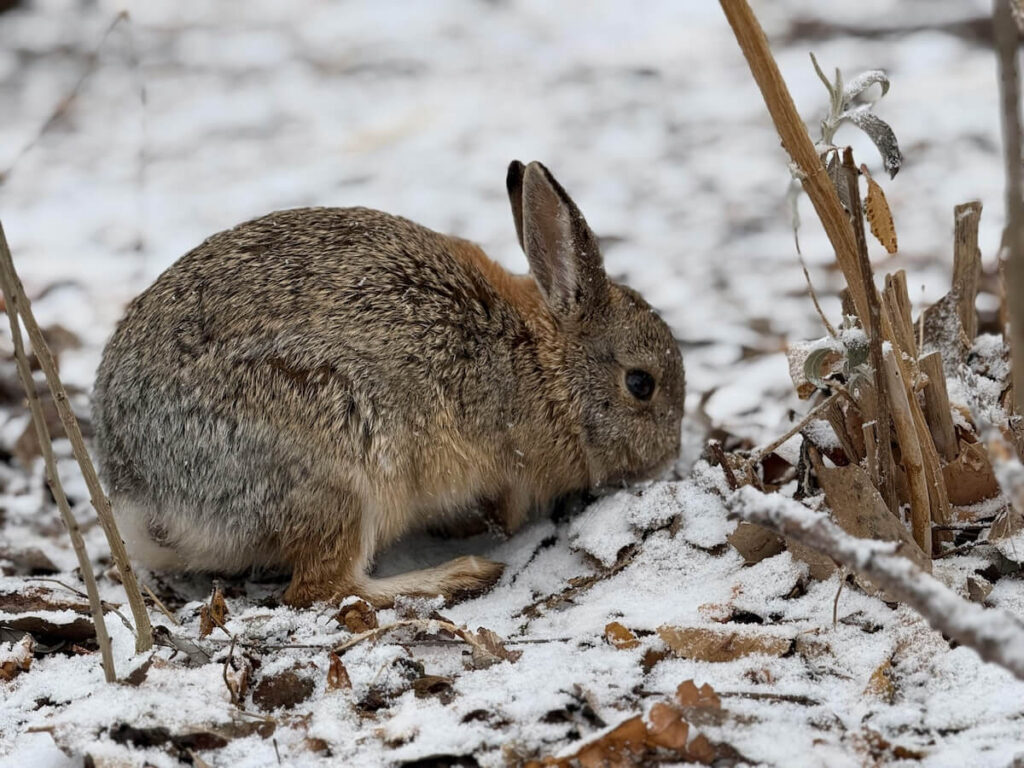
“A rabbit. A big one. Your grandma cooked it in a stew.”
“Does rabbit taste good?”
“Sure. If we get any today, it’s what we’ll eat for supper.” He looked at his son for any shift in enthusiasm but found none. Finally, he asked, “Are you getting excited?”
“A little. I’m nervous about walking with the gun,” Dylan admitted.
“You’ll be fine. Just make sure to watch where you step and not to trip over anything. It can get a little tricky where we’re going.”
“Okay.”
He pulled the truck off of the main highway onto an access road which wound through a line of trees. Beyond, a large expanse of grassy fields and small groves of trees framed a large central lake. The lake, a cooling reservoir for the local power plant, had been converted—along with its surrounding lands—into a sort of conservation area. Steve had watched it grow in size several times over the course of his life. Their hunting spot was further down the gravel lane, bordered on one side by a fencerow and a smaller line of trees in the grounds’ interior. Once there, he slowed the truck to a gradual stop.
“You ready?” Steve threw the gear shift into park and cut the engine. It gave one last loose rumble before dying.
Dylan’s smile betrayed boyish enthusiasm. “Yeah,” he said. Steve heard the glee in his son’s voice, and his heart was glad.
“Like this?” Dylan kicked his leg into thick underbrush. He had surprised the boy by telling him upon their arrival it didn’t matter if he whispered; the idea was to make as much noise as possible to scare up the game.
“Yeah. Just pay attention—if something jumps out, you won’t have too long to get a good lead on it.” Steve followed his son from a distance, watching him anxiously dig his feet into the grass. They’d been out in the field for a half hour and hadn’t seen much of anything. Steve knew the strength of boyish impatience, and imagined the boredom stirring in his son’s mind.
The boy suddenly paused and looked back. “Was Mom good at cooking rabbit?”
His father didn’t immediately answer. The question had caught him off guard. He too stopped, though he didn’t look at the boy. Instead, he surveyed the open field around them. Finally, he cleared his throat and said, “She was.”
“Are you good at cooking rabbit?”
“Not as good as her.”
It was true. Despite his abilities at killing and cleaning the animal, his wife had been the real miracle worker. Alison could easily whip up a delicious rabbit stew in a matter of hours. That was, of course, before the thunderstorm last year.
The boy was sick with the flu that summer, and couldn’t keep anything down. Alison had volunteered to go to the store for medicine while Steve stayed home. He remembered sitting on the couch as his son slept, waiting for her return when the phone rang.
A sheriff’s deputy told him the news in the disconnected way only a phone call can facilitate. He could only remember fragments of the conversation, but they were the worst of the lot: Alison’s car, tilted into a ditch at a forty-five degree angle; her body in a field fifteen feet away, broken. She wasn’t even five miles from home.
She must’ve spun out on the wet road, the deputy said. By the time someone came across the wreck, she was already dead. I’m so, so sorry.
Dylan’s voice interrupted his thoughts. “Are we ever going to find any today?”
“Maybe. Tom Mason told me he came across a decent-sized warren out here a few weeks ago.” Steve rested the forward part of his gun against his collarbone as he spoke.
“What’s a warren? Is that a kind of rabbit?” He quickly looked around as if he might have a chance at seeing a huge one.
“No, it’s not a rabbit,” he put his hand over the boy’s head and ruffled the soft orange hood against his scalp. “It’s where a lot of rabbits breed at once.”
“What does it look like?” He was still turning his head in all directions to find it.
“A bunch of holes. You won’t see one until you step in it because the grass will be in the way.” He started to walk forward, kicking into the brush just like his son was doing earlier.
“Okay.” The boy, curiosity apparently satisfied, began doing the same. Just as his foot hit the ground, he jerked his leg back. A rabbit hopped from the cover of the grass. Steve turned and watched it take two or three more leaps across a small clearing to his right. Dylan pulled the hammer back on the gun and started to raise it to his shoulder, but was much too slow.
Two loud reports rang out across the open field. Steve, seeing the rabbit move first, had already aimed his gun ahead of it. He fired two shots, the first of which peppered the ground just behind the rabbit. The second caught its hind section in a spray of pellets, and the animal spun mid-hop.
The whole episode took less than a few seconds, but the boy’s face betrayed his amazement before his words.
“Woah.”
Dylan watched his father walk over to the still-twitching animal and, picking it up by its legs, shake it. After two hard jerks, it stopped moving.
“What’d you do that for?” Dylan asked.
“It wasn’t dead yet, and I didn’t want it flopping around in the bag.” Steve threw the backpack over his shoulders. He then took a few steps over to where he had fired his gun and picked up the two empty shells, putting them in his pockets. “Let’s see if we can’t find another one for you.”
Twenty minutes later, it was Steve who kicked up the next rabbit. Dylan was faster this time, but still unfocused. He watched as the boy quickly pulled the hammer back and fired a wild blast in its direction.
“Which way did it go!?” Dylan was excited now; invested. He hurriedly broke the gun’s form over his left arm and pulled out the empty shell. He fumbled around in his pocket for a replacement.
“Now calm down,” Steve whispered. “I see it, and it’s sitting still. Just reload your gun, alright?” He motioned toward a small shrub not three or four yards away. Just beneath it, the small furry form twitched. Its tiny eye darted in different directions. Steve glanced at the boy and watched as his son, still trembling excitedly, found exactly what he was looking for and loaded it into the gun.
“Where?” the boy asked, that same sense of urgency still in his voice.
He pointed with the gun and motioned for the boy to slowly make his way next to him. “It’s over there. Come stand next to me.”
“Wow. It’s just sitting there. Should I shoot it?”
“Here’s your best chance,” the man said.
“It almost feels like cheating.” The boy shouldered the shotgun and lined up the rabbit in its sights.
Steve hissed, “You’d be doing the same thing if you were hunting deer and saw one standing in a field. Now before it moves go ahead and…”
The deafening explosion from his son’s shotgun cut short the command.
Dylan shot it through the neck.
Steve watched his son take a few trembling steps toward the animal. Its body convulsed. Steve joined Dylan at the rabbit’s side. They stood over it and watched its spasms lessen both in intensity and frequency. Dylan picked it up by its hind legs, as he had seen his father do, and vigorously shook it twice. He said nothing.
“Nice shot.” He put his hand on his son’s shoulder.
The boy still said nothing.
“Let me put it in the bag.” Steve took the bag from his shoulder and opened it. As Dylan turned to face him, Steve saw a teardrop beginning to edge its way down his son’s cheek. Dylan lamely held the animal up.
“I don’t think I want to go hunting anymore,” he said.
“What? Why?” He dropped the second rabbit in with the previous kill.
“It just doesn’t seem right. I mean, that rabbit was just sitting there and I shot it and now it’s dead.” More tears were on Dylan’s face, and a choking sob rose in his throat.
“You’re okay, son.” Steve pressed his hand a little firmer into the boy’s shoulder. “Let me take your gun.” He placed the bag around his shoulders again and took the boy’s gun. He watched as Dylan wiped his eyes and nose with the sleeves of the sweatshirt. “Let’s go home.”
“Okay.” Tears continued their jagged descent across his cheeks, but Dylan looked as though he was welcome to be free of the gun’s weight.
Steve picked up the pizza cutter and wheeled its blade through the melted cheese and crust. He had cleaned the rabbit as soon as they got home, but only after he told the boy to go inside and play video games for a while. Now, the two of them sat in the kitchen in silence. Dylan’s tears had dried. Steve decided not to cook the meat of their kills, and instead ordered pizza. Maybe eating the rabbit would be too traumatic.
Instead of discussing Dylan’s ordeal, Steve silently thought back to the first successful hunting trip with his own father: how he too had stood over the warm body of an animal and shuddered, sobbing. He had thrust his gun at his father and wanted no more part of the experience.
Boy, his father said, one day you’ll like it. It’s either that, or you’ll sit at home with your mother.
Steve couldn’t say the same thing to his son. Maybe one day Dylan might come around, just as he had. And while he knew the truth—that of no guarantees, thanks to car crashes or heart attacks—he imagined the two of them had plenty of time. With enough pizza and love, he thought, they would be just fine.